Robin and Rowling

2 Comments

Assassin's Apprentice

Despite having been an avid fantasy reader when I was younger, I have been unable to read fantasy fiction as an adult. Those who are bored enough to regularly read my blog will remember that several months ago, I wrote a post about this. I ultimately concluded that, for some reason, I was no longer able to suspend my disbelief to the extent that fantasy fiction required. I don’t think I’ll be shocking anyone when I say that fantasy fiction is proliferated with less than competent writers, who recycle saccharine storylines with ironically unimaginative characters. And also, at the other end of the fantasy spectrum (and perhaps edging more toward the sci-fi realm) are those intimidating novels which present universes vastly different from our own, which simply require too much effort to comprehend. And frankly, I couldn’t be bothered.

I read often, and broadly. I took a recent foray into magic realism, and then diverged into gruesome Japanese thrillers, and then ended up with allegorical social commentary. But for a long time, I’ve had a longing for an absorbing, well-written fantasy book that would satiate my wandering imagination. And I have found it.

Robin Hobb’s Farseer trilogy has had me utterly engrossed for weeks. At the recommendation of a friend, I picked up the first book, Assasin’s Apprentice, in the midst of a drought of reading material. I trudged through the first third of the book without any particular interest. It told the story of a young boy pretty much dumped on the doorstep of the castle of the royal family of the Six Duchies as the illegitimate son of King-in-waiting Chivalry. I read about how he was taken in as a stable hand, and developed a strange bond with a puppy. A few chapters later, he had been addressed by King Shrewd, his grandfather, and had been forced into the ominous position of the King’s assassin. And then I followed the boy, nameless at this stage, as he undertook training in poisoning, strangling, weaponry and manipulation. And when he developed ability for the telepathy known in the Six Duchies as the Skill, I suffered through the torturous schooling required to hone it so that it could be of use to the monarchy. And when the boy, who soon took on the name FitzChivalry, was sent on his first mission as an assassin, I basked in the awe and wonder of the Mountain Kingdom he was sent to.

When Fitz was being tormented by the sadistic Skillmaster, Galen, I hated Galen with an aggressiveness I had not felt toward a literary character for a very long time. When the royal procession pulled up to the Mountain Kingdom, I read and reread the description of the setting, trying to place the excitement and thrill I felt at being brought so fully to such a brilliant place through the novel’s pages. I developed a gruff fondness for Fitz’ surrogate father, Burrich, the competent stablehand whose motives are often undiscernible (at this stage in the trilogy). And I felt a fierce admiration and kind of loyalty toward the Mountain Queen, Kettricken, who entered into battle for the people she ruled, and came out bloody and bedraggled.

I read the first two books, which are considerably long, in a couple of weeks. I literally got so much joy out of them that I wondered why it was that I hadn’t reinitiated myself into fantasy fiction before this. I spent a good deal of time wondering what it was that made them so compulsive and so addictive. And then it struck me. I realised that I hated Galen in the same way as I had hated only one literary character before in my life – the greasy haired, repulsively sarcastic potions master of Hogwarts. Robin Hobb’s Farseer trilogy has elicited from me, at the age of twenty, the same response that Harry Potter evoked in my ten year old self.

It is the fullness of the world that Hobb has created. It is the reality of the characters, and the complexities of their livelihood and relationships. It is the humour that exists in their day to day lives. It is the sprawl of the politics, contrasted with the minutiae of courtly interactions. It is the experience of delving into a vibrant environment with an unknowing guide, in Fitz and like Harry. It is the dread of impending threat, from the Red Ship Raiders, as it was from the Death Eaters that haunted my childhood nightmares. It is the heart-wrenching pain that goes along with the losses Fitz experiences, and the giddy excitement when he has an unexpected gain. It is in the writing that sweeps the reader along so smoothly that they do not remember the point where they stopped reading and began experiencing.

There is almost nothing that the plot of the Farseer trilogy has in common with Harry Potter. It is simply the nature of the experience that drew me in, in the same way that only Rowling has managed before.

Literature is so very, very important to me. I have said before, and will undoubtedly say again, the Harry Potter series changed my life. I can only compare the emotional connection I have to the Harry Potter books to the way in which some people relate so strongly to the music they listen to. It is an investment in the characters and the world in which Harry lives that has been a part of the composition of my own character since I was ten. It opened up true literature to me as a child, and influenced my decision to study to be a teacher. From my incessant gushing, I’m sure you can imagine, then, that Robin Hobb’s books are so incredibly special to me. I’m making my way through her bibliography, and I’m very excited that there are a number of trilogies, and that her books are quite lengthy to boot! So I wanted to share this excitement with my friends who read, and especially with those who inhabited Hogwarts in the same way that I did (for those who did not, I’m sure I’ve come off as a raving loony…but you get that). Thank you also, to Niki, who recommended these books so wholeheartedly to me. Bet you didn’t think they’d be this important to me.

Because comments make me feel good, tell me:

If you loved Harry Potter as much as I did, have you ever found a series that you experienced in the same way?

Have you read Robin Hobb’s books? What are your thoughts on them? Can you recommend other books that are as good as hers?

Do I use too many Latinate words in my prose? (No, don’t answer that…I know I do, my Shakespeare professor told me so!)

Queensland Floods, Brisbane River Bursts Its Banks

Leave a comment

In the last forty-eight hours, residents of Brisbane have had to watch as their city was taken underwater. This comes after the horrendous atrocity faced by Toowoomba, where a relentless wall of water swept through the town, literally devastating everything in its wake and claiming the lives of ten citizens. The Brisbane River, around which the city is built, burst its banks on Jan 11th, overflowing into the central business district and the iconic South Bank. Those working in the city were slowly but effectively evacuated, and the waters throughout Brisbane continued to rise. Residents were forced out of their homes, and others were stranded from accessing their properties as a result of flooded streets. People lost their houses, their possessions, their pets, their security, their homes. And all of Brisbane looked on in horror as the city gradually filled with water. My school, which sits behind South Bank, will be affected, and my university has been flooded. I was devastated to watch South Bank itself fill with water, from the boardwalk up. South Bank is Brisbane’s heart, the convergence of the city’s individuality, spirit and atmosphere. It was an escape and a refuge for me during high school – a link to the freedom and anonymity afforded by the CBD itself. And now it is saturated.

This is an event which has been experienced, witnessed and communicated over the internet. The Queensland Police Service has been tireless in their constant updating over Facebook, working incessantly to keep the public aware of the situation and the way that it affects them. On my news feed, my friends posted statuses to say that their power had been cut, asking if others could keep an ear out for updates related to their area. People posted photos of their areas and roads, broadening the view of the flood’s impact. One friend, badly affected by the floods, asked if residents of West End could look out for lost cat. On Twitter, radio host Meshel Laurie, whose parents live in Toowoomba and who lives on the city’s North side, produced a continuous stream of hard encouragement and direction, urging followers to continue to look forward, to work toward a solution and to reflect on the lasting impact later, at one point tweeting: “Not to downplay heroic stories, but we don’t have time to reflect right now guys, or to wallow or lose focus. We haven’t peaked yet. Forward”. My friend tweeted that she would donate the profits of the sales from her Etsy store to the flood relief, admirably doing her bit to help (I have already made my first purchase – link here). And of course, the SES and emergency services are simply incredible – their work is amazing. Thank you to them all.

South Bank before the floods


I plan to volunteer with friends this Sunday, to help in any way that we can. But I guess I wrote this to urge anyone who may have stumbled across this blog while searching the topic of the Queensland floods to please, please find a way to help too. This is a spirited and vibrant community which is still in shock from this disaster. Before the impact of this situation sinks in, please exercise your generosity and donate to the flood relief.

Quick thoughts

Leave a comment

1. It’s too hot!
2. The silly season brings with it an abundance of tinsel, gift wrap, replays of Mariah Carey’s Christmas track, and RUDENESS. Calm down everyone, there is enough time for us all to indulge in heavy consumerism!!
3. I have to eat my words in regards to Herbert’s epic sci-fi novel Dune – it is amazing, after all. Stand by for a more comprehensive rave review in the coming weeks.
4. I have a hit counter attached to my blog – I keep track of the search terms used to locate it. Some interesting ones come up sometimes, recurrently…
5. My most-played lists now contain an eclectic mix of TSwift, Katy Perry, 30 Seconds to Mars, Kings of Leon, Tegan and Sara and Little Red. Yup. That’s where my cool-points are derived from.
6. I bought The Bourne Identity. Anyone read it?

Now taking music and book reccommendations. Any takers? 😀

Review: Unbearable Lightness

2 Comments

I have never been interested in reading non-fiction books for recreation. This is probably because for me, reading is an escape, designed to enable me to relax into a world of someone else’s creation. However, Portia de Rossi’s promotion of her memoir, Unbearable Lightness, had me intrigued. I saw her on the 7pm Project, where she talked about how she was not a victim of her eating disorder, but its survivor. I heard Meshel Laurie on Nova, our local station, talking about the book, and the fact that Portia had specified that only women were to interview her throughout her promotions. When the men on the station complained that this was a pathetic grab for publicity on Portia’s behalf and that there was no reason to impose such a measure because men liked lesbians too, I realised exactly why she had asked for female-only interviewers. And without ever having read her book, I began to admire her. So her promotional tour was a successful one, because it convinced me to buy her memoir. I carted it with me up to the Sunshine Coast on my holiday with my boyfriend, and for the first day, could not keep my nose out of it.
Unbearable Lightness is mostly concerned with Portia de Rossi’s struggle with her eating disorder, which falls into the category of both anorexia and bulimia. I’m not really sure what I expected when I picked the book up – perhaps a tale of young girl, pressured by Hollywood to whittle herself into an unrecognisable insect, confused by her sexuality and forced to adjust herself and her body to fit in and to be successful in the big city of L.A. I think I was expecting some tragedy, and then some epiphany, and a life-change, probably one which was affected by a brave coming out, and a supportive partner.

I wasn’t wrong, exactly. Certainly, de Rossi was affected by Hollywood pressure to be and look a certain way. She was definitely confused by her sexuality, and she indicates at the book’s conclusion that her relationship with Ellen DeGeneres helped her to overcome her eating disorder. What surprised me about the book, though, was the way that Portia de Rossi pointed the finger directly at herself. While there’s a veiled accusation that her eating disorder was influenced by her mother’s failure to accept her sexuality, Unbearable Lightness treats Portia’s severe eating disorder as a phenomenon which was mostly internal.

The book is written in an unusual way. It focuses on a constant narration of Portia’s interior thought pattern, and mostly avoids dialogue with other characters. So the reader comes to view the progression of Portia’s eating disorder, which begins as an overly cautious diet, progresses to bulimia and ends in anorexia. This has a very odd effect: you are appalled by what Portia is doing to herself, because through her interior narration, you are given the closest, most personal perspective of her abuse of diet and exercises; however, at the same time, you find yourself somehow accepting that what she was doing was a necessary, and therefore acceptable, measure to take, given her circumstances. I came to the conclusion that Portia de Rossi has written her book exceptionally well. She has managed to draw the reader into her own mental state, immerse them in her eating disorder, and enable them to understand what she was going through. At the same time, though, she has articulately shown the reader how to recognise the warning signs of an eating disorder in someone around them.

Yo-yo is an inaccurate way to describe weight fluctuation. It is not the term anyone would use to describe the highs and lows that were the basis of my self-esteem. Yo-yo sounds frivolous, childish, disrespectful. Yo-yo sounds like a thing outside of yourself that you can just decide to put away and not pick up anymore. It suggests that there are end points, predetermined stopping points where the highs and lows end, because the string of a yo-yo is a certain length that never changes. My ‘bottom’ would always be 63 kilograms, my ‘high’ 52. But it isn’t like that. There’s nothing predetermined about gaining and losing weight…My weight was my mood, and the more effort I put into starving myself to get it to an acceptable level, the more satisfaction I would feel as the restriction and the denial built into an incredible sense of accomplishment.

Unbearable Lightness does not endeavour to decimate the Hollywood lifestyle, but it certainly does not depict it favourably. Interestingly, neither does it depict the production of the hit show Ally McBeal very well. Something else of note about the novel is that it does not delve into Portia’s relationship with talk show host Ellen DeGeneres. I actually really liked this about the book, because it meant that the author could discuss the role of her sexuality without needing to relate it all back to her high-profile marriage. It does close with an epilogue where Portia depicts life as a survivor of her eating disorder with Ellen, but it does not discuss the progression of her marriage. Somehow it felt more genuine that way. I suppose that for me, it’s like her message is not disrupted by her public image. It’s simply her personal story.

There’s no sex, there’s no drugs, and there’s no rock and roll. But this book kept me hooked, and I don’t even like biographies. At its end, I admired Portia de Rossi even more, for her survival, and for the realisation of the irrelevancy of weight in the face of life, and in the face of missed opportunities. This is the realisation that saved her. Most importantly, though, I admired her for the strength of her belief that she is not a victim, but a survivor, which permeates her prose throughout the book. She is no longer someone who uses her eating disorder, or who is used by it and this is the sign of her true recovery.

Pop Culture Passport

6 Comments

Do you know what I would like? A pop culture passport. So that when, say, a book is released, and you read it at that time, you get a stamp in your passport to say “Spot Goes to the Circus – Read on May 24th, 2009”. So when Spot Goes to the Circus comes to a cinema near you, and all of a sudden there are screeching teens wearing “I kissed a Spot and I liked it” shirts, you can hold your pop culture passport high above your head while you enter the cinema to watch the movie. And all the while, you’ll retain your dignity as a fan who liked Spot Goes to the Circus before it got big, and it was – God, forbid – cool.  Confused by my ramblings? I quite often am. To elaborate:

I’ve talked before about Twilight – how I once enjoyed the novels, which were (embarrassingly) once my high school escapism to a rainy, idealised world where vampires didn’t bite. See, if I had my pop culture passport back then, then I could’ve gotten a stamp that acknowledged that in 2006, I was reading, enjoying and re-reading those books. And now, in 2010, I am glaring, huffing and blatantly avoiding the Twilight cult. Yes, cult.

Unfortunately for me, my pop culture passport would sometimes let me down, especially when it comes to music. I’m a serial band-wagon jumper, and in the eyes of the indie-hipsters that dominate today’s festival music scene, (which I avoid like the plague) my taste does not leave much to be desired, I’ll admit. Take my newfound obsession with Taylor Swift. I hopped on that bandwagon rather swiftly (ha) when her new album, Speak Now, came out. While I did actually run out and purchase her other two albums the day afterward, I believe that in the case of my beloved TSwift, I have to accept my status as a bandwagon-jumper. This is also the case for other bands or albums…like my recently developed affinity for Vampire Weekend and Sia.

But my passport stamp for The Hunger Games would be old and faded by now. I read that book over a year, perhaps eighteen months, ago, at the recommendation of a friend whose stamp predates even mine. And it’s now that I desperately wish that pop-culture passports exists, because I (and many other THG fans) predict that once Peeta has a boy-next-door, floppy-blonde-hair and sparkling-blue-eyes face, and Gale has a tall-dark-broody-and-handsome body, and Katniss has a girl-next-door-turned-bad actress to her name, we might lose our precious text  of empowerment and corruption to the same audience who turned Twilight into a sickening fad. That being said, I do not care who plays Katniss. I do not care about her previous body of work. As long as she is Katniss for the two hours or so that she occupies the screen, I will love her. I am interested in the political developments of the movie, because I like to see it unfold, but I most certainly don’t feel like weighing into the discussion about who should/should not play her. I want an unknown because she will be unknown, and THG will be kept a little more true to its nature.  I am looking forward to this film more than any other for such a long time. I just wish I could watch it at a private screening, with other fans whose stamps are as old and faded as mine. This being said, I am not against new fans of the novel – to argue that I want only a few people to consume it would be ludicrous. Of course, I want this book promoted as much as possible – but as the amazing young adult novel it is, not the grounds for cinematic wonder, or teen hype. Am I making sense?

Anyway, rant = over. (C’mon, it’s what blogs are for!)

Although, I wish to pose the following: What have you enjoyed that a pop culture response has spoiled (Please don’t say Taylor Swift – I’m sorry, okay?)?

A follow-on to my previous post

Leave a comment

I received an enormous amount of hits to my last post, which discussed the issue of the misuse of language in relation to social minorities. You can read it here if you are interested. The response I received, both through the sheer amount of hits and the insightful comments on the post itself, was brilliant. Flicking through the stats for my blog, I realised that a website called r-word.org had picked up the entry and had re-posted it on their twitter account. Their website is one which stands up for the elimination of the “r word”, and which asks people to pledge their determination to contribute to this cause. I thought I’d put a link up to it on my blog, because I think what they are doing is amazing. Special mention to John C. McGinley, everybody’s favourite bad-tempered doctor on Scrubs (Dr. Cox, that is), who is a champion for the cause of Autism awareness, and other causes for special needs. He has a son with Down Syndrome.  Here’s R-word.org.

Here’s John C. McGinley talking about this cause:

And because we now know what John cares so much about, and is working so hard to change, I thought I’d chuck in a little video showing us all the things his alter ego Dr. Cox does not care about:

“Jeff, that wiggle who sleeps too darn much!” :p

An important blog.

18 Comments

A controversial question was posted on my FaceBook stream recently. I know that in putting it forward, the person who posted it was looking to see what people would say in response out of genuine interest. However, the question in itself sickened me, and I found some of the responses to it to be astonishing.

I need to preface this by stating that this post is not an attack on my friend, but my own response to this concept, which I felt warranted explanation. And I also wish to say that if you choose to comment on this post, and I find your comments to be inappropriate in any way, they will not be shown and I will delete them. Such is the power of the moderator! ^_^

The question was: why do minority groups contend the labels society assigns them, when there are, essentially, much bigger fish to fry in their fight for social acceptance (whatever the level)? Or, to break it down a little further – why, for example, do homosexual people oppose the fact that the word “gay” is used in the current vernacular in a derogatory manner (as in, “I have to work late tonight.” “Oh, that’s gay.”).  I am not gay, and so cannot speak on behalf of the homosexual community. However, the idea that issues such as this would be considered trivial is appalling to me. My problem with the fact that this question was asked at all was that labelling minority groups is seen as a small concern in relation to the other battles that these groups are forced to confront in society. This is not so. Imposing labels on anyone or any group, or adopting language which pertains to a particular discourse in an inappropriate manner, is not acceptable in any way.

Yes, language does evolve. The meaning of a particular word or phrase can change radically over the course of a few decades. For example, my grandmother uses the phrase “doing a line” in an extremely different context to me; to her, “doing a line” with somebody means being in a relationship with them. For example, I have been “doing a line” with my awesome boyfriend S (who always clamours for a mention in my blog – there you go S, said you were awesome and everything!) for three years. Of course, in contemporary culture, doing a line would refer to consuming a drug via nasal inhalation – snorting cocaine. This goes to show just how changeable language really is. However, simply the fact that language shifts does not excuse the use of some words in particular contexts.

Coming back to that idea of things being “gay” if they are irritating or lacking in any way; I am fully aware that this is an almost completely acceptable use of the word in today’s language. Consider this – how often have you heard the word “retarded” used to describe something that is substandard, confusing or mistaken? For example: “Did you see the end of CSI last night?”  “Yeah, it was retarded.”
  For me, the meaning of the word retarded in this context falls just a little too closely to its actual one. It refers to something being “stuffed up” or stupid. I hope that the problem with this use of language is apparent enough that I don’t need to expand upon it, but this proves my point that the misuse of language can be offensive. I had a high school teacher who told the class that she never marked in anything other than red pen, and that it was “a bit autistic of her” (making a ‘joke’ referring to the obsessive tendencies associated with some strains of autism). How far is it to go from calling something “gay”, to referring to something or someone as “retarded” to explicitly acknowledging an “autistic moment”?  Of course, there are some that would use language in this way and not think twice about it, and in a culture such as ours, I acknowledge that no, you can’t fight every battle. However, to suggest that there’s no reason to bother being offended by it because there are bigger, more important battles to contend with is…you get the idea.  

And here is my major issue. This notion of the misappropriation of language was somehow applied to the use of the word “nigger” in relation to black people. It was suggested that if black people do not wish to be referred to by this word by white people, then perhaps they should stop using the word in rap and urban music and comedy. This infuriated me. Here’s an excerpt from John Grisham’s brilliant novel, A Time to Kill (1989). I think it’s pretty self-explanatory.

“Carl Lee Hailey walked slowly around the yard, never leaving the fence. He thought of the two boys, somewhere out there, dead and buried, their flesh rotting by now, their souls burning in hell. Before they died, they met his little girl, only briefly, and within two hours wrecked her little body and ruined her mind. So brutal was their attack that she could never have children; so violent the encounter that she now saw them hiding for her, waiting in closets. Could she ever forget about it, block it out, erase it from her mind so her life would be normal? Maybe a psychiatrist could do that. Would other children allow her to be normal?
  She was just a little nigger, they probably thought. Somebody’s little nigger kid. Illegitimate, of course, like all of them. Rape would be nothing new.”

A Time to Kill addresses many of the issues that were presented in To Kill a Mockingbird in a modern light, suggesting that despite the passage of time, these are wounds which are not healed. The use of “the ‘n’ word” in this passage is an extremely important one. Carl Lee, whose daughter has been raped by white people, believes that this happened to her because she was seen as a “little nigger”. Because to him, this phrase, when uttered by a white person, carries with it a different meaning than it does when a black person uses it.

 It’s all about discourse. Yes, I’m going to go there. To use this word from within an African-American discourse, for example, means one thing –brotherhood, identification, perhaps. So it is not for anyone to say whether the use of “the ‘n’ word” is appropriate for use by black people, because they use it in a context they find appropriate. To use this word to describe a black person from within a white discourse means something different and abominable. Just look at how the word works within the passage above.

The English language has 60,000+ words. In the generation of such an enormous language, of course there are going to be some words which are not politically correct, or which are harmful. Likewise, of course these words will slip through the cracks of acceptability, and wind up becoming a part of everyday vernacular. But language is quintessential to human existence. If somebody sees a problem with it, then it is a problem, because they believe it is. I find it highly offensive and totally backward to suggest that to contend an issue of language is a not as important as other battles which need to be fought in the fight for social equality. I see language as the starting point for many of these things.

On a more basic level, I think it’s completely barbaric to say that “there are more important battles to fight” than the misappropriation and misuse of language. What is and is not important is subjective. If, on a day to day basis, you find the use of the word “retarded” in everyday language to be a problem, then for you, the cessation of the use of the word in this way constitutes an important battle to fight.  

This is my opinion. And I’d like to hear yours on the topic. I just felt that following discussion of this concept with a number of people, and indeed, across a number of generations, that to impose your beliefs of what is and is not acceptable, and what is and is not offensive, is completely wrong. Comment on this post to contribute to this.

Favourite female characters. Spot the recurring theme?

2 Comments

Lately, I’ve been thinking about what makes or breaks us as people. As friends, especially. When times are tough, can you be called upon? Or will you be running for cover? Are you prepared to stick your hand up to help others (like Katniss)? I have some excellent people around me who I know I can trust no matter what. And when times are tough, they step up to the plate.
  I also read a lot, and watch a lot of TV.  Especially with TV, my taste is reliant on the development of characters. So here are my five favourite female characters, all of whom share a (quite obvious) characteristic.

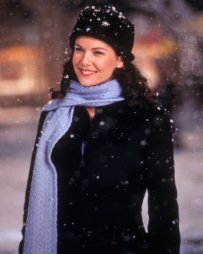
5. Lorelai Gilmore

Lorelai is that mythical woman who, on top of raising a gifted child, manages to stay on top of her career and open her own hotel, support half of Stars Hollow when they need her, liase between the wants of difficult parents and her own needs, undertake study and still have time to wander around doing quaint things in the small town she calls home. AND, all while saying really funny things while talking really, really fast.
  I know, before anyone points it out, that Lorelai is a TV character, and thus is able to accomplish these things with the help of exceptional scripting, hair and makeup and lovely set design. But she’s still inspirational. Perhaps it’s the constant cheeriness in the face of stress and difficulty that is the essence of Gilmore-ness. Whatever it is, she’s one of my all-time favourite female characters, and has been since I was about twelve.Lorelai Gilmore

4. Lisbeth Salander

Anyone who reads my blog regularly (or puts up with the continual plugs I give it on FaceBook) would know that I recently read The Millennium trilogy (here and here). I believe Lisbeth Salander is one of the most incredible female characters I’ve ever come across. In the time since I wrote about the Millennium trilogy, I also watched the film versions of the first two novels, and have to give massive props to Noomi Rapace, who played Salander. She did justice to Lisbeth. I really didn’t know if it was possible for the character to successfully translate into film, but thanks to the incredible skill of this actress, she did. Lisbeth is damaged, and she’s been pigeon-holed by society, but she does not take it laying down. She uses whatever means possible to achieve her goals, and to cope with whatever is thrown at her. She’s not a role model in the traditional sense, but you gotta admire her.

3. Katniss Everdeen

I think my strong response to Katniss comes as a result of her inevitable comparisons to the flimsy Bella Swan. Katiniss is the female embodiment of out and out warfare. She is angry, furious even, and every single thing that she does is about proving that to the world (/the Capitol, for those in the know). I know Katniss can be viewed as simply a vehicle of a movement which contains the real strength, but to anyone who considers her in that light, I ask you to think about the moment she blurted out to the entire nation that she would rather step up to certain death in place of her delicate younger sister. Or when she raises that final arrow and makes a decision which embodies her fury so absolutely. My favourite moment of Katniss’ from all three books is only a small one. It’s from when she’s having dinner with the representatives of the Capitol, including Effie, who are ultimately there in order to prepare her for her death. Effie comments that she’s glad that Katniss and her fellow tribute Peeta are more refined than the tributes from their district last year, because they are eating their meal with cutlery rather than their hands. As narrator, Katniss tells us that the tributes from last year were from the poorest part of the poorest district, and had never had a complete meal in their lives. Disgusted with Effie’s preoccupation with propriety, Katniss proceeds to eat the rest of her meal with her hands. A small, yet powerful rebellion.

2. Hermione Granger

When I was quite young and I first read Harry Potter, I found myself shaking my head at Hermione’s perpetual bookishness, her insistence upon looking up everything in enormous volumes, and her apparent magnetism to the library. That is, until I sheepishly realised that people in glass houses should not throw stones. Once I’d gotten over the fact that she and I had some quite similar tendencies, I realised that in Hermione, J.K. Rowling had created a female character whose strength often outweighed that of her male counterparts, and which was not based in appearances. Wasn’t it both entertaining and refreshing to find Ron in particular in constant awe of Hermione’s vast intellect? And further, that it was not an intellect which existed despite her fantastic looks? She was quite average, really. Although her Muggle alter-ego, Emma Watson, is far from average-looking these days. Over the years, I have come to treasure Hermione, and she holds a firm place among my favourite female characters.  

1. Veronica Mars

For me, there is no dispute – Veronica Mars, portrayed with undeniable sass and verve by Kristin Bell in the television show of the same name, is my all-time favourite female character. She’s aggressively determined, she’s admirably smart, she rocks that droll sense of humour that takes the victims of her wit a moment or two to realise that she’s just verbally decimated them, and she takes no prisoners. But I think perhaps my affection for Veronica is because (at least in season one), she’s largely a loner. I love that she has all the qualities I listed above, but is capable of operating alone at all times. I both admire it and can relate to it, given that my experience at high school was quite a solitary one, with the exception of a couple of close friends (think Wallace). At this end of the favourite-character scale, Veronica vies with the brilliant Rory Gilmore and the tough-as-nails, yet cute-as-pie Buffy Summers, but I think it is Veronica’s strength that carries her through. Walking through a crowd of people who are whispering and laughing about you is no easy feat, and Veronica did it, often alone. Rory probably would have done the same, but maybe with her head stuck in a book and her enormous headphones blocking out the noise around her (a tactic I favoured myself), and Buffy was never without her faithful Scooby Gang in times of trouble. Veronica is my pick-me-up when I feel like crap, and she never fails me.

I think this proves my point nicely:

Who are your favourite characters? Who sits at the top of your list? What did you think of the video from Veronica Mars? Oh, and did you spot the recurring theme? :p

Short post, many questions!

4 Comments

I have been rereading The Hunger Games, which I believe to be more enjoyable and engrossing each time around. I also read The Republic of Trees, which, frankly, I was mostly disappointed in. I’m up to my ears in Shakespeare and a million little pieces of assessment, and am busy at work, as we are preparing to merge with another store in November. I’m looking forward to seeing Let Me In, the new Hollywood adaptation of the Swedish novel and film, but I’m a bit dubious about what might happen if it’s received well (or worse, badly), given that it is, arguably, a dangerous take on vampirism. Indeed, it looks at vampirism in more than one sense… I’ve also been watching heaps of different TV shows, including Six Feet Under, Big Love and The X Files, which I love. Any reccommendations for new ones? I’m working with the idea of out with the old, in with the new, with a lot of things lately, and I’m looking for some new texts. Also, what are your thoughts on Dexter?
  Longer post soon. 🙂

The Girl Who Played With Fire

Leave a comment

The Girl Who Played With Fire

The Girl Who Played with Fire gives the impression that The Girl with the Dragon Tattoo was just laying the foundations for the strong social critique and conspiracy which begins to emerge fully in the second volume of the series.  Lisbeth and Blomkvist have shifted apart since their closeness in Hedestad; Lisbeth, with her stolen billions, is living reclusively, and Blomkvist is still in the process of recovering from his near-death experience.  A freelance journalist approaches Millenium magazine with an expose of sex-trafficking in Sweden, and Berger and Blomkvist eagerly accept his findings. They begin preparing a special issue which will reveal a large number of eminent public figures as rapists and sexual criminals. Three quarters through the finalisation of his research, the freelance journalist and his PhD candidate partner are murdered, and Salander is the prime suspect. I can’t say much more than that without infringing on spoiler territory, but needless to say, this novel lives up to its predecessor.     

She was the woman who hated men who hate women.
I work in a big shopping centre, and when I’m walking around the malls, I keep coming face to face with Lisbeth Salander. The advertisements for the film adaptation of The Girl Who Played with Fire are enormous, unavoidable posters, and they are embedded throughout our Westfield centre in Brisbane, Queensland. I wonder if Larsson, who wrote the novels in his leisure time and never saw them published, ever expected that Lisbeth and her story would travel from Sweden all the way to this part of the world. And I have to wonder if everyone who has been devouring the novels as ferociously as I have has been conscious of what Lisbeth means, and just how significant her presence in Westfield is.  Lisbeth Salander is, I think, the new face of crime fiction. She is proof of a new step in literary achievement – an absorbing, engaging, popular crime novel with something to say.  

Have you read the novels? What did you think of them? How did you feel about Lisbeth? I plan to write a post about Lisbeth herself after I finish the whole novel, and I’m very interested in how readers feel about her as a character, so let me know your thoughts on the topic.

Also, how do you feel about the film, if you’re a fan of the books?

Older Entries

Design a site like this with WordPress.com
Get started